For years, unpredictable weather patterns, declining soil fertility, and low crop yields left many farming families struggling to produce enough food for their households in Kalama and Kangundo sub-counties. Today, many of those same families are harvesting more, earning more, and feeding their households with confidence, thanks to a simple but powerful learning approach fronted by PEN Kenya.
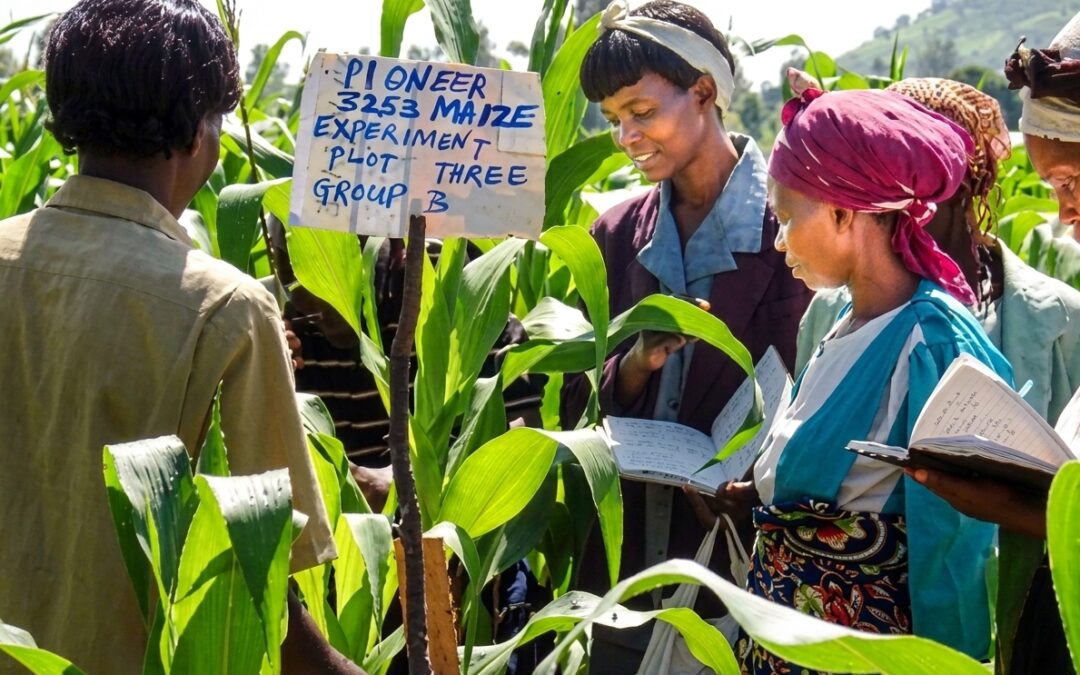
Between 2009 and 2020, PEN Kenya implemented Farmer Field Schools (FFS) in Kalama and Kangundo, bringing farmers together to learn by doing. Instead of relying solely on theory, participants conducted practical field experiments, growing different crop varieties under the same environmental conditions, using the same soil and treatment technologies. The hands-on approach enabled farmers to compare crop performance and make informed decisions on the varieties and farming methods best suited to their local conditions.
The impact has been far-reaching. By guiding farmers to identify the most suitable crops and effective treatments for their soils, farmers recorded improved agricultural yields. Higher production translated into increased household incomes, while diversified food production improved family nutrition. At the same time, the adoption of organic farming practices and reduced use of chemical fertilizers contributed to better environmental conservation.
The initiative directly trained 280 farmers through on-site learning sessions, while another 12,000 people benefited from field demonstration days, where successful farming practices were showcased and shared with surrounding communities.
For Esther Philip, joining Mulaani Farmer Field School marked a turning point in her life.
“Since the time I joined Mulaani Farmer Field School, my life changed greatly,” she says. ” I have never gone to the market to buy food. What I get from the market is what is not produced locally like sugar, salt, cooking oil or rice. I learnt to select seeds, planting early, fertilizer and manure application and adopting moisture retention practices that have resulted to increased production for my household and surplus supporting my income needs after selling.”
Her experience mirrors that of many farmers who transformed their farms into reliable sources of both food and income through improved agricultural practices.
At Mangumu Farmer Field School, Chairman Mr. Onesmus Kiveta has witnessed the transformation across the entire membership.
“Every member has a kitchen garden for household use and nutrition promotion,” he says. “After we were taught to integrate drought-tolerant crops, my members grow green grams together with maize and beans to ensure that when the weather patterns change and rains fail, we still harvest and life continues to be softer to us. We meet on a quarterly basis to take stock of what each member is doing and what is working well and vice versa as a way of peer-to-peer learning.”
The regular meetings have become more than progress reviews. They provide a platform for farmers to exchange ideas, solve challenges collectively, and continuously improve their farming practices in response to changing climatic conditions.
The Farmer Field Schools have shown that lasting agricultural transformation begins with knowledge shared among communities. By equipping farmers with practical skills and encouraging experimentation, PEN Kenya enabled families to make informed farming decisions that continue to deliver benefits years after the intervention.
Today, the fields of Kalama and Kangundo stand as living evidence that when farmers are empowered with knowledge, they cultivate more than crops, they grow food security, stronger livelihoods, healthier families, and resilient communities