Returning to Kalama village in Machakos felt less like a field visit and more like stepping into a living memory. It had been nearly twenty years since PEN Kenya implemented the water projects in this community, and as we gathered with the villagers, I quickly realized that time had not faded their memories. One by one, they spoke about what life used to be like before the intervention long walks in search of water, children missing school, households constantly strained by scarcity. Listening to them, it became clear that water once shaped every decision they made, every day.
As they shared their stories, gratitude filled the space. The beneficiaries (villagers) spoke with deep appreciation for PEN Kenya, not just for bringing water closer to their homes, but for restoring dignity and hope. What struck me most was how vividly they remembered the change how the coming of water marked a clear “before” and “after” in their lives.
Again and again, they mentioned Mary Mutuku. Hearing her name repeatedly was powerful. The community spoke of her role with warmth and respect, praising the dedication and coordination she provided when the project was being implemented. To them, Mary was not just a project representative; she was someone who walked with the community, ensured their voices were heard, and saw the work through to completion when it mattered most.
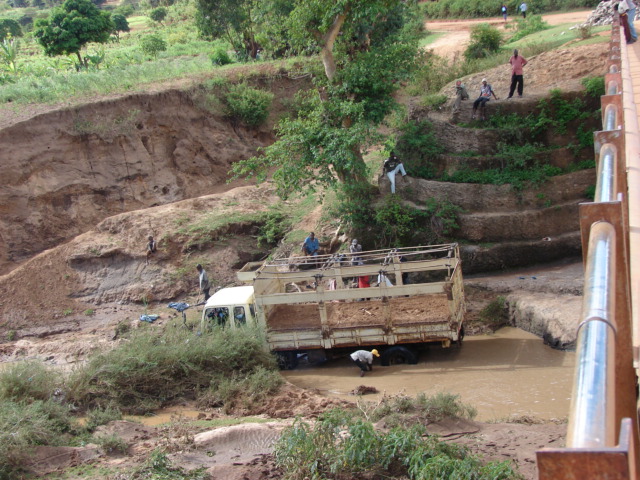
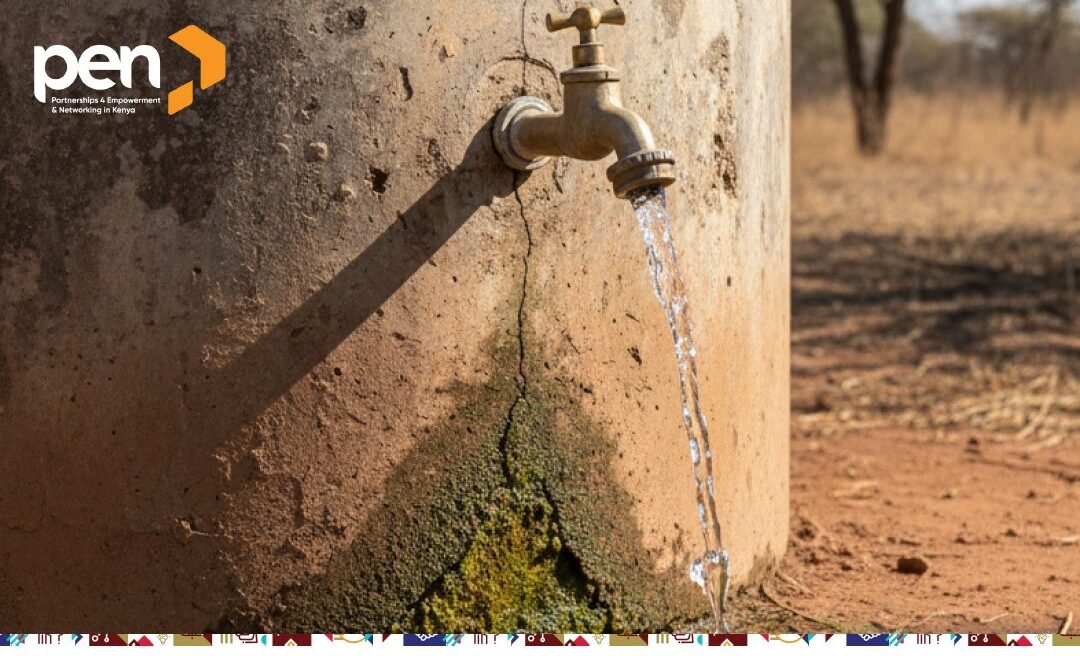
After the meeting, together with my colleagues John, Chris, Mary, we moved through the village to see the water tanks and sand dams that had been built all those years ago. Standing before them, I was struck by their resilience. The tanks were still standing, the sand dams still quietly holding water beneath the river bed.
These structures were not relics of the past; they were still part of everyday life in Kalama.
Walking from site to site, I felt a deep sense of humility. It is rare to witness development work that continues to serve a community two decades later. In Kalama, the impact was not captured in reports or statistics it lived in the way people spoke, in the ease with which water was now accessed, and in the pride the community took in what had been built with them, not just for them.
As we prepared to leave, I carried with me a renewed understanding of what meaningful work looks like. True impact takes time. It grows through trust, consistency, and genuine partnership with communities. Kalama reminded me that when development is done right, its effects ripple across generations.
Twenty years on, the water still flows and so does the story of what is possible when people are placed at the center of change.