Voices of Kwale Communities Secures Hope for Survivors of Gender-Based Violence
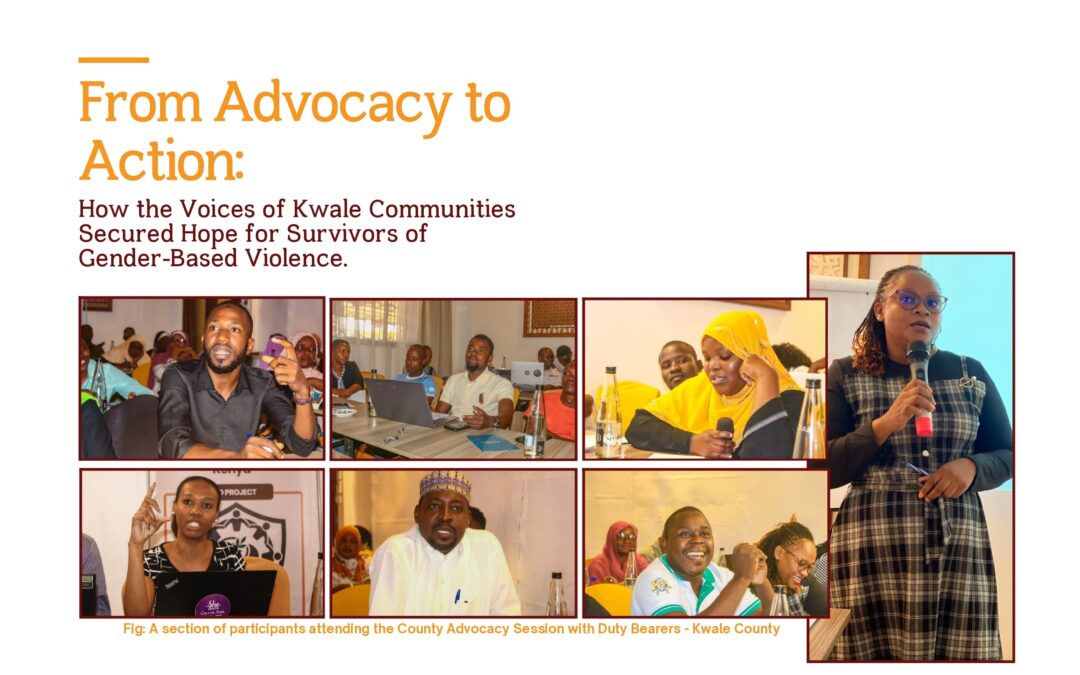
Kwale County Rather than working independently, the CSOs came together to develop a coordinated advocacy strategy focused on one urgent issue: the growing need to protect survivors of Sexual and Gender Based Violence (SGBV). With financial facilitation and technical guidance from PEN Kenya, they prepared a unified petition calling on the county government to establish safe houses in Kinango and Lunga Lunga sub-counties. When the advocacy forum convened, the petition was no longer just a document. It represented the voices of countless women, children, and vulnerable members of society whose stories often remain unheard. County leaders listened. The discussions were constructive, solutions-focused, and grounded in evidence. By the close of the forum, Members of the County Assembly had committed to supporting the construction of the safe houses through a proposed allocation of KES 15 million in the county budget. For survivors of gender-based violence, the Commitment represents far more than buildings. It signals safety, dignity, protection, and the possibility of beginning again. For the civil society organizations involved, it is proof that informed, coordinated, and constructive advocacy can shape public policy and influence government action. And for PEN Kenya, it affirms a simple but powerful belief: when civil society and government choose partnership over confrontation, communities stand to benefit the most. The journey is not over. The commitment must now be translated into action through budget approval, implementation, and accountability. Civil society organizations and citizens alike will continue to play a critical role in ensuring that the promise becomes reality. If delivered as pledged, the safe houses in Kinango and Lunga Lunga will stand not only as shelters for survivors but also as lasting symbols of what is possible when dialogue, collaboration, and community voices come together to create meaningful change. As trust grew, so did the confidence of the organizations. “We commit to approving a budget allocation of KES 15 million to support the construction of safe houses in Kinango and Lungalunga Sub-Counties by October 2026. We call upon civil society organizations and citizens to actively follow up with the County Executive and the relevant departments to ensure the successful implementation of this commitment.” Rachael Katumbi, MCA, Kwale County Assembly For many survivors of gender-based violence in Kwale County, escaping abuse has often meant stepping into uncertainty. With no safe shelter to run to, many have been forced to return to the very environments where they experienced violence, simply because there was nowhere else to go.Standing before civil society leaders, government officials, and community members during a county advocacy forum, Kwale County Assembly Member Rachael Katumbi made a commitment that many had long hoped to hear. “We commit to approving a budget allocation of KES 15 million to support the construction of safe houses in Kinango and Lungalunga Sub Counties by October 2026. That reality could soon change. We call upon civil society organizations and citizens to actively follow up with the County Executive and the relevant departments to ensure the successful implementation of this commitment.” The announcement was more than a budget pledge. It was the culmination of months of patient organizing, dialogue, and collaboration between civil society organizations and the Kwale County Government a process led and supported by PEN Kenya. For years, many civil society organizations have struggled to build trusting relationships with government institutions. Too often, they are viewed as critics rather than partners, making meaningful collaboration difficult. Yet communities depend on both sectors working together to address pressing social challenges. Recognizing this gap, PEN Kenya set out to change the narrative. Working with youth-led and women-led organizations across Kwale County, PEN Kenya invested in strengthening advocacy skills, organizational capacity, and collaborative leadership. More importantly, it created opportunities for civil society and county officials to meet not across opposing sides of a debate, but around the same table with a shared purpose improving the lives of local communities.\